Granite Fissure vs Crack: The Fastest Way to Understand the Difference
A fissure forms naturally as granite develops. It often follows the stone’s mineral pattern. It may appear in more than one area or stand out under low-angle light. It does not always reduce the slab’s quality or performance.
A crack forms when outside force causes the stone to split. Impact, transport, shop stress, installation, cabinet movement, or poor support can play a part. Cracks may look straighter, cross the stone’s pattern, change the surface plane, or worsen over time.
Those are clues, not a verdict. Some natural fissures can feel a bit open. Some cracks are hard to see. Location, timing, movement, and the slab’s first condition all matter.
What Is a Fissure in a Granite Countertop?
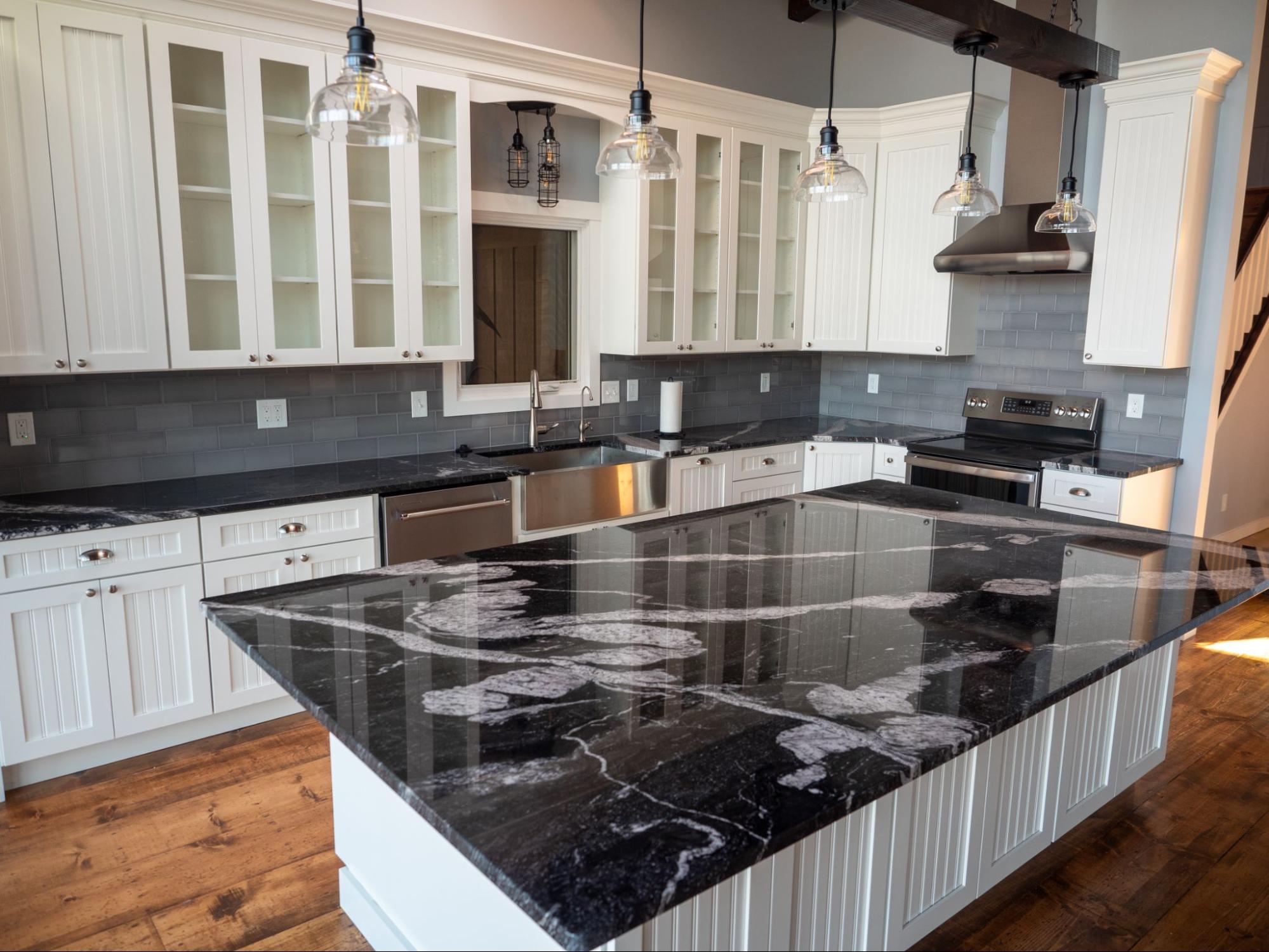
Granite forms from different mineral crystals under intense geologic conditions. Where those crystals meet, the stone can show fissures, veins, small pits, and other natural characteristics. These features often follow the color and movement already present in the slab.
A fissure may be visible but stable. It can appear more pronounced when sunlight or under-cabinet lighting crosses the polished surface at a low angle. Some areas may also receive resin reinforcement during slab processing or fabrication. A filled natural feature is not automatically evidence of damage.
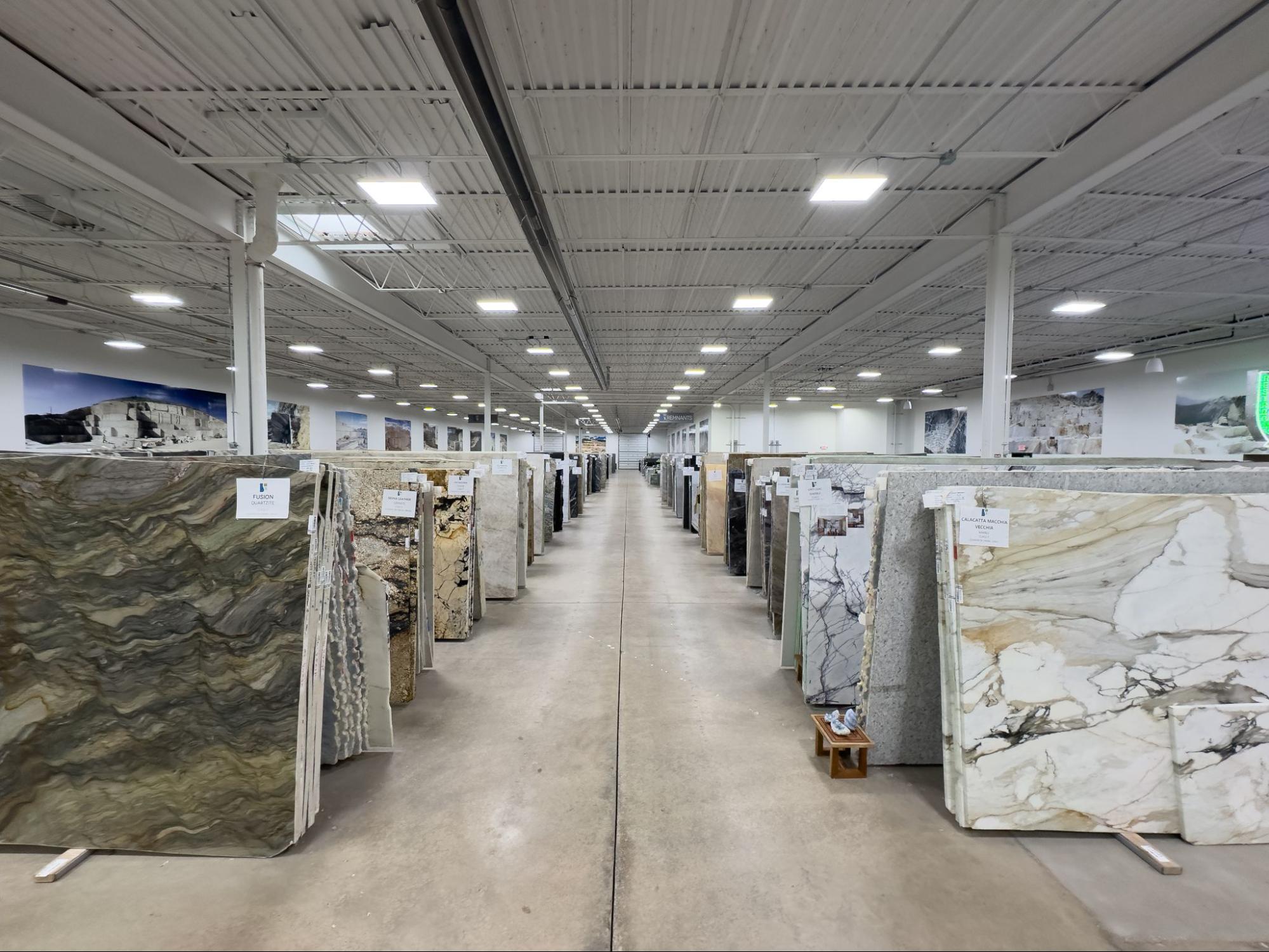
This variation is one reason a small sample cannot represent an entire granite slab. Viewing the full stone helps you understand which lines and mineral changes will remain part of the finished countertop.
What Is a Crack in Granite?
A crack is a physical break caused by force or stress after the stone formed. It may develop during handling, fabrication, transport, installation, or later use. Impact and insufficient or changing support can also contribute.
Cracks often deserve closer attention near sink and cooktop cutouts, narrow sections, corners, seams, or unsupported areas. Still, location alone does not prove the cause or determine responsibility.
A new line raises concern, as does a gap or edge chipping. One side sitting higher than the other also needs review. A stable line seen in the original slab is less concerning. Firenza’s guide to common granite countertop problems and their causes explains how cracks fit into the wider performance picture.
Five Clues That Help Distinguish a Fissure From a Crack
No single clue confirms the diagnosis. Use these observations together, then ask a professional to inspect anything that appears structural or continues changing.
- Follow the pattern: A fissure often moves with mineral boundaries, veins, or color changes. A crack may cross the natural pattern or travel in a straighter direction
- Check the surface plane: Look across the counter from a low angle. If one side sits higher or the reflection breaks sharply, the line may need inspection
- Use touch carefully: A fingernail may catch on a crack, but it can also catch on a natural or filled fissure. Do not treat this as a conclusive test
- Consider the location: Lines radiating from sink or cooktop corners, narrow strips, or impact points deserve attention because these areas can concentrate stress
- Watch for change: Widening, new chipping, movement, or a line that appeared after installation carries more concern than a stable feature documented before fabrication
Photos from above and from a low angle can help an expert compare the line over time.
When a Line in Granite Should Be Inspected
Arrange an inspection if a line is new, widening, separating, changing height, shedding chips, or extending through an edge. Movement at a seam or a break near a sink or cooktop cutout also deserves prompt attention.
Until it is reviewed:
- Reduce stress: Do not place heavy objects or lean on the affected area
- Document the condition: Photograph the line in even light and from a low angle
- Record what changed: Note when you first saw it and whether an impact or cabinet movement occurred
- Avoid DIY filler: Adhesive or repair products can hide evidence and complicate a proper assessment
Sealer will not repair a deep break. A fabricator must check the stone, support, layout, and nearby areas before giving advice.
Full-Slab Selection and Careful Fabrication Reduce Surprises
Natural granite rewards close inspection before it is cut. Seeing the full slab in person lets you review fissures, veins, pits, color shifts, and movement at their true scale. It also gives the fabricator better context for cutouts, seams, and layout.
Firenza combines four generations of stoneworking experience with in-house CNC fabrication and professional installation. That continuity helps the team explain natural features before fabrication and plan around the stone’s character. It also gives you a clear point of contact if a line appears concerning later. Learn more about what to look for in a local showroom or visit Firenza’s Eastlake Design Center to view full slabs and discuss your project.
FAQs
Can a Fissure Become a Crack?
It is possible for stress to follow an existing weak or open area, but a fissure does not automatically become a crack. Support, cutout location, impact, handling, and the condition of the stone all matter. If a known line widens, chips, moves, or changes level, stop loading that area and arrange an inspection.
Should Granite Fissures Be Filled?
Some fissures receive resin or other reinforcement during slab processing or fabrication. Whether a specific area needs treatment depends on its condition, location, and the fabrication plan. Do not apply a retail filler without guidance. A fabricator can decide whether the feature is stable, cosmetic, or requires reinforcement.
Are Fissures Near a Sink Normal?
A natural fissure can occur anywhere in a slab, including near a future sink location. However, sink cutouts create narrow areas and stress concentrations, so a new or changing line nearby deserves inspection. Its location alone cannot confirm whether it is natural or structural.
Does Sealing Fix a Granite Fissure?
No. Sealer helps reduce the absorption of liquids in porous stone. It does not bond a structural break or stabilize a moving area. If the line is separating, widening, or chipping, have the fabricator inspect it rather than relying on sealer.
Can Quartz Have Natural Fissures?
Engineered quartz does not develop natural geologic fissures in the same way granite does. Lines in quartz may be part of the printed or manufactured design, a seam, a surface mark, or damage. If a line is new or changes, ask the fabricator to identify it.