
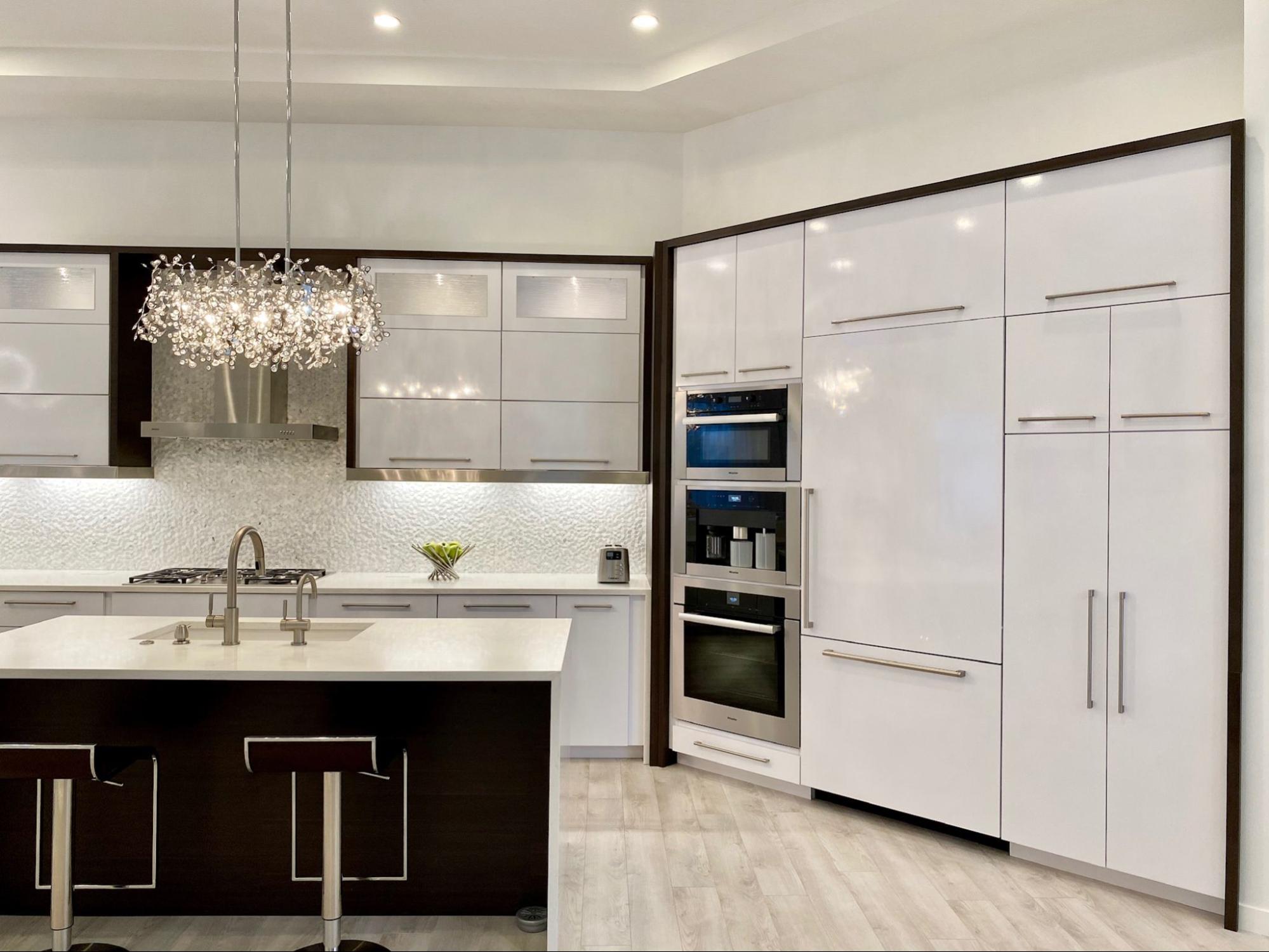
Planning your kitchen’s technology layer alongside the design, not after it, is what separates a kitchen that functions beautifully from one that just looks good. Here’s a breakdown of the smart kitchen technologies shaping 2026 and what to think about before your remodel begins.
Smart Appliances
The foundation of any connected kitchen starts with the appliances you use every day. In 2026, smart appliances like ovens, refrigerators, and dishwashers do considerably more than their predecessors. Remote preheating lets you start dinner from your phone before you walk through the door. Built-in cameras let you check what’s in the fridge without opening it. Leak detection and energy tracking add a layer of practical oversight that older models simply can’t offer.
The real value isn’t the tech itself.
It’s how well these appliances integrate with the rest of your kitchen’s design and workflow. Choosing smart kitchen technology early in the remodeling process means your cabinetry layout, electrical planning, and ventilation can all be built around the appliances you actually want, rather than retrofitting around whatever fits.
Voice-Activated Assistants
Hands-free control has become one of the most practical additions to a well-designed kitchen. With Alexa, Google Assistant, or Siri integrated into your space, you can set timers, adjust lighting, play music, or add items to a grocery list without stopping what you’re doing. For anyone managing a busy household, that kind of frictionless multitasking adds up quickly.
The key is planning for it. Voice-activated kitchen technology works best when your smart devices are connected to a single ecosystem from the start. Mixing incompatible platforms mid-project creates gaps in functionality that are difficult to resolve after installation. Deciding on your preferred assistant early keeps everything running together the way it should.
Smart Faucets and Sinks
Smart faucets have moved well beyond touchless operation. In 2026, voice-activated water dispensing, precise temperature control, and integrated UV sanitation are all available in fixtures that fit naturally into a premium kitchen design. Some models include built-in cutting boards or filtered water dispensing, combining function and form in ways that older fixtures couldn’t.
From a remodeling standpoint, plumbing rough-in and counter cutout planning both need to account for the fixture you’re installing before the stone is fabricated. Getting that sequencing right is where working with an experienced design and fabrication partner pays off. The countertop and the fixture should be planned together, not one after the other.
Connected Cooking Devices
Connected cooking devices fill the gap between your major appliances and the way you actually cook day to day. Wi-Fi meat thermometers monitor your roast from another room. App-controlled slow cookers let you adjust temperature and timing without hovering over the stove. Smart coffee makers can have your first cup ready before you’re out of bed.
These devices tend to be lower-commitment additions, but they still benefit from intentional planning. Counter space, outlet placement, and storage all need to account for the devices you use regularly. Building that into your kitchen layout during the design phase keeps your workspace clean and functional, rather than cluttered with cords and adapters once everything is installed.
Kitchen Lighting Tech
Good kitchen lighting has always been part of a thoughtful design. Smart kitchen lighting takes it further by giving you precise control over ambiance, task visibility, and energy use from a single app or voice command. Motion sensors can activate lights when you enter the kitchen and power them down when you leave. Scheduling lets you program different lighting scenes for morning prep, evening entertaining, or late-night snacking without touching a switch.
The rough-in stage is where this gets decided. Fixture placement, dimmer compatibility, and switching infrastructure all need to be resolved before walls are closed and finishes are installed. Lighting is one of the easiest things to get right early and one of the most expensive to change later.
Interactive Displays and Recipe Assistants
Devices like the Echo Show or Google Nest Hub have found a natural home in the kitchen. Step-by-step recipe guidance, built-in timers, and ingredient substitution suggestions all reduce the mental load of cooking without requiring you to touch your phone with messy hands. More advanced integrations can connect to your smart fridge or pantry to flag what you’re running low on before you start cooking.
The question worth settling early is where these displays live. A dedicated spot in your upper cabinet layout or a built-in shelf niche keeps the device useful without competing for counter space. Planning that placement during the design phase means it looks considered, not like something you found a corner for after the fact.
Smart Ventilation and Air Quality
Smart ventilation in a modern kitchen goes well beyond a standard range hood. Today’s systems include air quality sensors that detect smoke, humidity, and airborne particles, then adjust fan speed automatically without you having to intervene. Integration with your home automation system means ventilation responds to what’s actually happening in the kitchen, not just what you remember to turn on.
Range hood placement, ductwork routing, and makeup air requirements all need to be factored into the kitchen layout before cabinetry and stone are installed. Ventilation that isn’t accounted for from the start is one of the harder things to accommodate cleanly once the project is further along.
Sustainability and Efficiency Tech
A smart kitchen can be a meaningfully more efficient one. Water-saving faucets reduce consumption without sacrificing performance. Energy-efficient appliances track usage and adjust draw based on actual need. Composting systems and food waste apps help cut down on what ends up in the trash. These aren’t fringe additions in 2026; they’re features homeowners are increasingly building in from the start.
The sustainability layer of your kitchen works best when it’s coordinated across your appliance selections, fixture choices, and material decisions together. Firenza’s team can help you think through those choices as a whole, so the result is a kitchen that performs well, looks beautiful, and operates with the kind of long-term efficiency that holds its value.
Planning a Smart Kitchen Upgrade in 2026
A smart kitchen isn’t built by adding technology after the fact. It’s designed with technology in mind from the first conversation. Every category covered here, from smart appliances and lighting to ventilation and sustainability, works better and looks better when it’s planned alongside your cabinetry, countertops, and layout rather than around them.
That’s exactly the kind of guidance Firenza brings to every project. Four generations of remodeling experience mean we’ve seen how the decisions made early in a project shape everything that follows. Visit our Design Center to explore your options in person, talk through your priorities with our team, and move forward with a plan that brings every part of your kitchen together.
Frequently Asked Questions
What is the best smart kitchen technology to start with?
Start with your major appliances. Smart refrigerators, ovens, and dishwashers have the highest daily impact and are the hardest to upgrade after your kitchen is built. Getting those selections locked in early shapes everything else around them.
Do smart faucets work with any countertop material?
Most do, but the cutout dimensions and mounting requirements vary by fixture. That’s why your faucet selection and countertop fabrication need to be coordinated before the slab is cut. Changing the cutout after fabrication is costly and sometimes not possible without replacing the stone.
Can I add smart lighting to an existing kitchen?
In some cases, yes. Smart bulbs and plug-in switches can be added without major renovation. However, if you want a fully integrated system with in-wall dimmers, motion sensors, and scheduled scenes, that work is much cleaner when it’s done during a remodel before walls are closed.
How do I choose between smart home ecosystems like Alexa, Google, or Apple HomeKit?
Start with the devices you already own and the phone you use daily. Compatibility between your ecosystem and new appliances is easier to maintain when you commit to one platform from the start rather than mixing systems that don’t communicate well with each other.
Does adding smart technology increase a home’s resale value?
Smart appliances, integrated lighting, and touchless fixtures are increasingly expected by buyers in the mid-to-upper price range. A kitchen that’s been thoughtfully designed with current technology tends to hold its value well and appeal to buyers who are making decisions at that level.


