
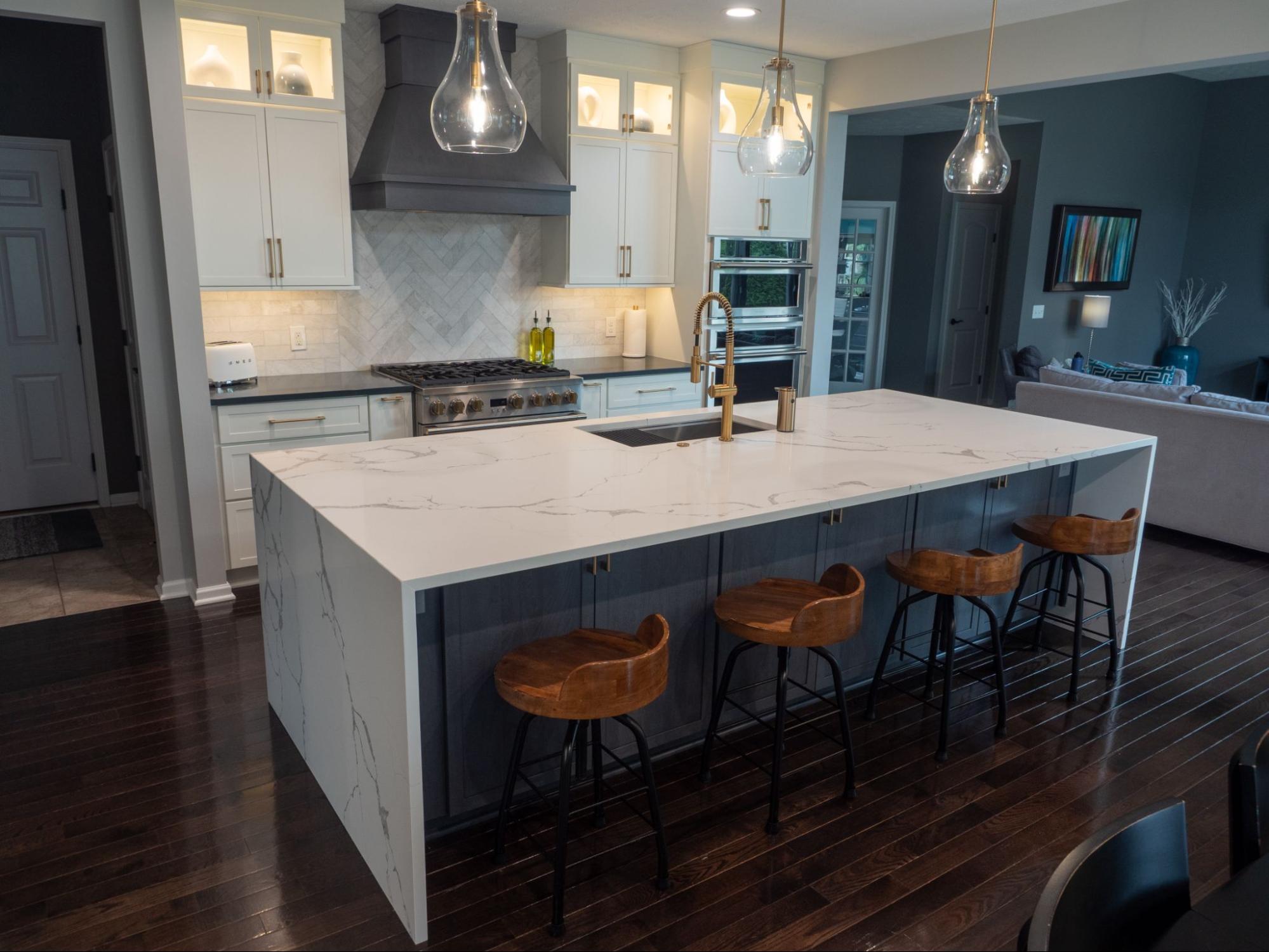
The problem? They are not the same surface. Quartz is an engineered material made with resins and pigments, while quartzite is a natural stone formed through heat and pressure.
That difference matters when you’re thinking about heat, staining, sealing, pattern variation, and long-term care. This guide explains how quartz and quartzite compare so you can choose with more confidence before visiting the showroom.
What Is Quartz?
Quartz is an engineered surface made by combining crushed natural quartz with resins and pigments. That manufacturing process gives quartz countertops their consistent color, controlled pattern, and wide range of design options.
For many homeowners, the appeal is simple: quartz is easy to live with. It has a non-porous surface, so it resists stains well and does not need sealing. It also cleans easily with mild soap and water.
The tradeoff is heat and sunlight. Because quartz contains resin, hot pans can damage the surface, and long-term direct sunlight may cause discoloration. That makes it a practical fit for many indoor kitchens, bathrooms, laundry rooms, and other everyday spaces.
What Is Quartzite?
Quartzite is a natural metamorphic stone, which means it starts as sandstone and is changed over time by intense heat and pressure deep within the earth. The result is a dense, hard surface with natural veining, texture, and variation from slab to slab.
Homeowners often choose quartzite countertops when they want the refined look of marble with stronger day-to-day performance. Quartzite is highly resistant to heat, making it well suited for kitchen use, and its natural movement gives each project a more distinctive look.
The main consideration is maintenance. Quartzite is porous, so it typically needs periodic sealing to help protect against staining from oils, liquids, and acidic substances.
Comparing Quartz and Quartzite
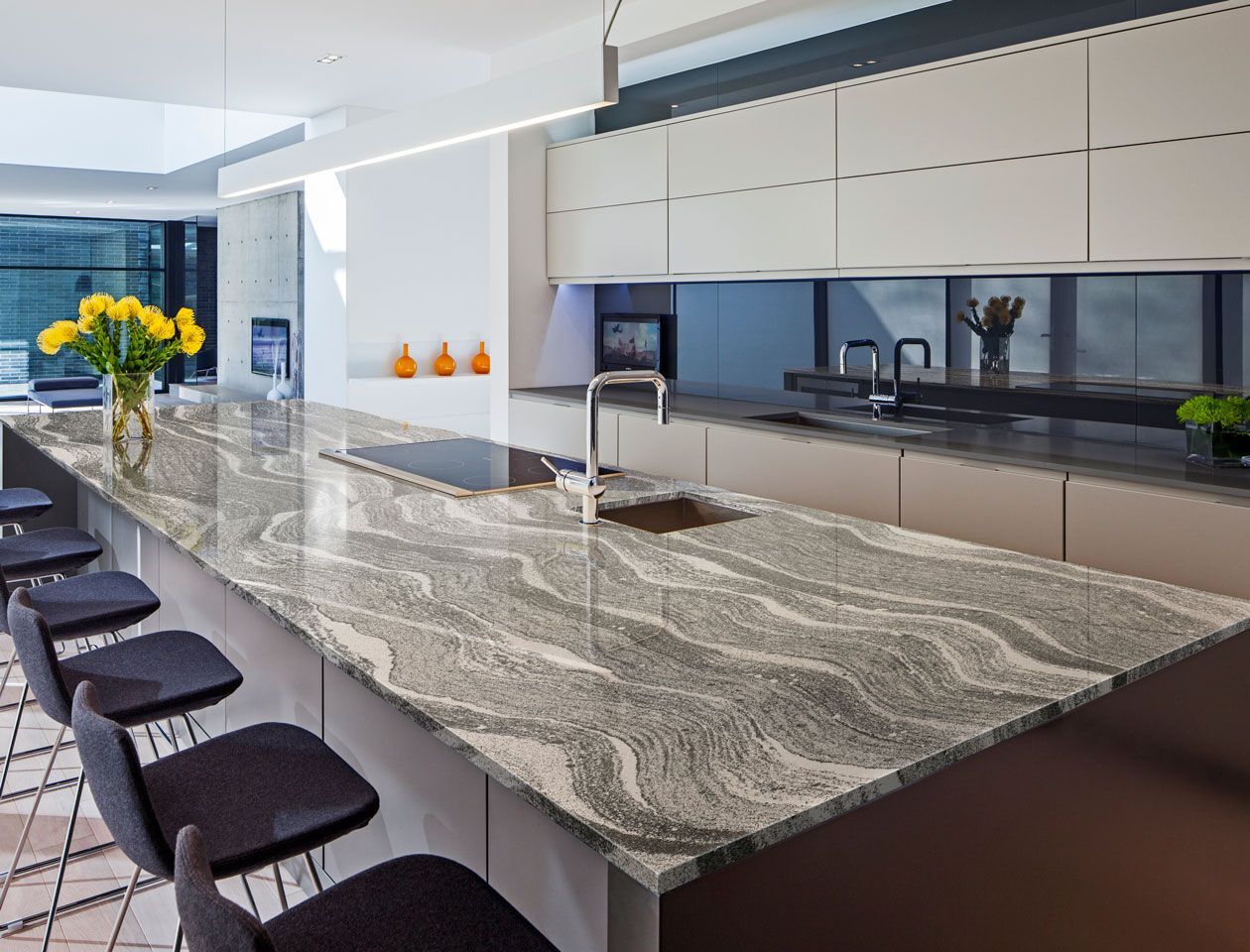
The biggest difference between quartz vs. quartzite is how each surface supports daily life. Quartz is the better fit when you want a consistent look, simple cleaning, and less maintenance. It works especially well for busy kitchens, bathroom vanities, laundry rooms, and spaces where spills are common.
Quartzite is the better fit when you want natural stone movement, stronger heat resistance, and a more distinctive slab. It works especially well for kitchen islands, statement countertops, and designs where the stone is meant to become a focal point.
For sinks and high-use prep areas, quartz gives you easier care. For homeowners who cook often and want natural beauty with more heat tolerance, quartzite is often the better match, as long as you are comfortable with sealing.
Which One Is Right for You?
Choose quartz if you want a polished, consistent surface that is easy to care for. It is a strong choice for busy family kitchens, bathroom vanities, laundry areas, and projects where you want dependable color and pattern across the space.
Choose quartzite if you want the character of natural stone and a surface that can handle more heat in the kitchen. It is especially well suited for large islands, statement countertops, and homeowners who want movement, depth, and a slab that feels truly one of a kind.
If you are deciding between the two, start with how the room will be used. From there, viewing larger samples or full slabs can help you feel more confident about the color, movement, and overall look before making your final selection.
Quartz vs. Quartzite FAQs
Is quartz or quartzite better for kitchen countertops?
Quartz is usually better if you want easier daily care, consistent color, and a surface that does not need sealing. Quartzite is usually better if you want natural stone movement, stronger heat resistance, and a more distinctive slab.
For a busy family kitchen, quartz can be the simpler choice. For a kitchen island, statement countertop, or space where the stone is part of the design focus, quartzite often gives you more natural character.
Does quartzite need to be sealed?
Yes, quartzite typically needs sealing because it is a natural porous stone. Sealing helps reduce the chance of stains from oils, liquids, and everyday spills.
A sealer does not make quartzite impossible to stain, but it gives the surface better protection when paired with regular cleaning habits. Quartz does not need sealing because it is engineered with a non-porous surface.
Can you put hot pans on quartz or quartzite?
Quartzite handles heat better than quartz because it is natural stone. Quartz contains resin, so very hot pans can damage or discolor the surface.
For quartz countertops, it is best to use trivets or hot pads. Quartzite is more heat tolerant, but using protection is still a smart habit to preserve the finish and avoid unnecessary risk.
Which stains more easily, quartz or quartzite?
Quartz is more stain-resistant in everyday use because it is non-porous. Quartzite can also perform well, but it depends on proper sealing and care.
If quartzite is left unsealed or the sealer wears down, oils, wine, coffee, and acidic substances can absorb more easily. That is why quartz is often the easier choice for bathrooms, laundry rooms, and high-use prep areas.
Is quartzite more expensive than quartz?
Quartzite is often more expensive than quartz because it is quarried as natural stone, can require more careful fabrication, and varies by slab rarity. Quartz pricing can also vary by brand, color, and design, but it is usually the more predictable option.
The best comparison should include the slab, fabrication, edge profile, installation, and any long-term maintenance needs.
Can quartz or quartzite be used outdoors?
Quartzite is generally the better choice for outdoor or sun-exposed spaces because it is natural stone and more UV stable. Quartz is usually not recommended for outdoor kitchens or areas with strong direct sunlight because resin-based surfaces can discolor over time.
For patios, outdoor kitchens, and bright sunrooms, quartzite is usually the safer material to consider.
A Better Countertop Choice Starts With the Right Guidance
Both quartz and quartzite can be excellent countertop choices, but they serve different priorities. Quartz is the practical, low-maintenance choice for consistent design and busy everyday spaces. Quartzite is the natural stone choice for heat resistance, movement, and a more distinctive look.
The most helpful next step is to compare both materials with your room, lifestyle, and design goals in mind. At Firenza Stone, you can visit our Design Center, view premium surfaces in person, and work with our team to choose a countertop that fits your home, your style, and the way you live.
Disclaimer: Firenza Stone serves homeowners and contractors throughout Northeast Ohio and surrounding areas, including Cleveland, Eastlake, Beachwood, Chagrin Falls, Mentor, Akron, Sandusky, Northern Columbus, and Erie, PA.


